

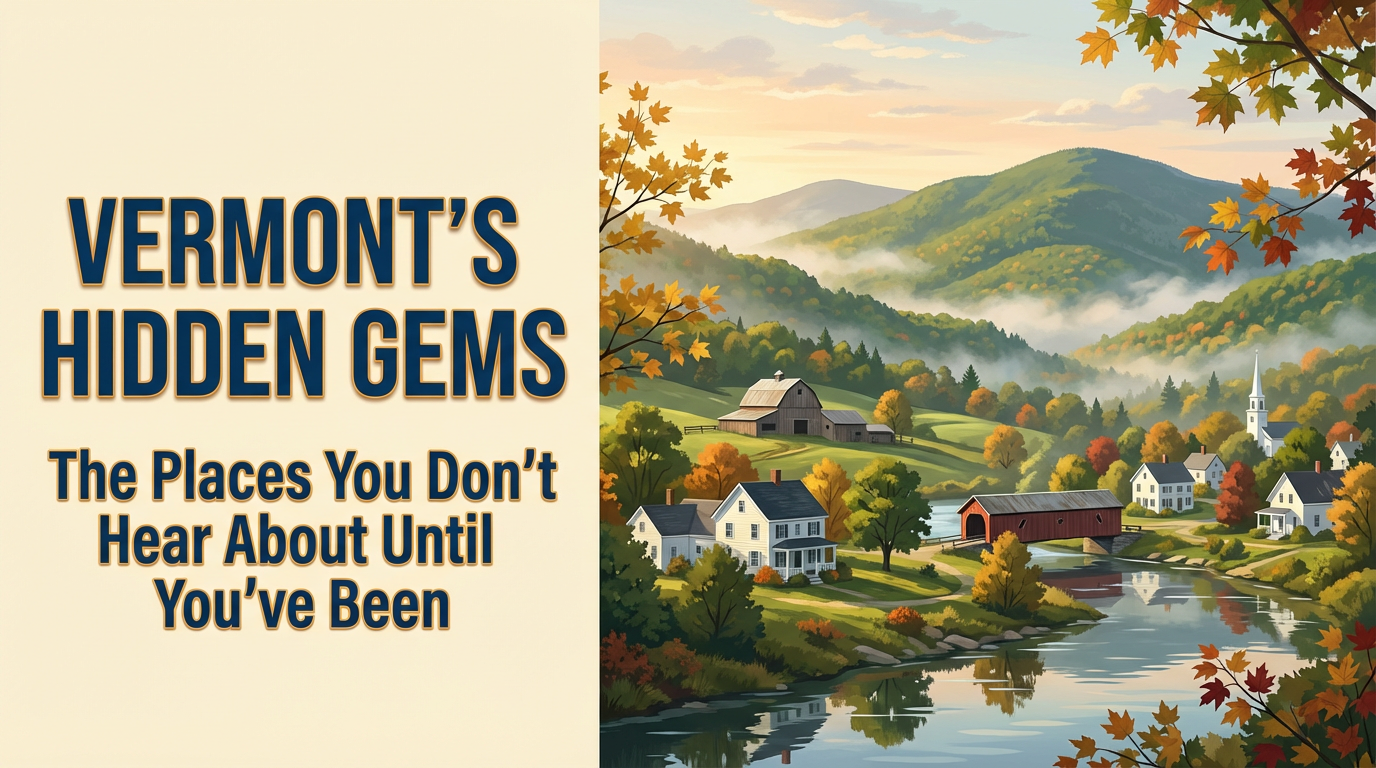
There’s a version of Vermont everyone knows postcard foliage, ski towns, maple syrup, and the kind of quiet that feels almost staged. But spend a little time off the main roads, and you realize the real Vermont isn’t the one on brochures. It’s smaller, less polished, and a lot more interesting.
The best parts aren’t obvious. You don’t stumble into them you hear about them from someone, or you take a wrong turn and decide not to correct it.
Here are a few of those places.
Grafton feels like a place that never tried to keep up with anything and benefited from it.
There’s a village green, a handful of historic buildings, and a pace that doesn’t shift much from season to season. It’s not built for traffic or volume. It’s built for people who don’t mind things being a little slower and a lot quieter.
It’s the kind of town where you notice details wood smoke in the air, the way the light hits the hills in late afternoon. Nothing dramatic, just consistently right.
Vergennes is technically a city, though that feels generous.
What it does have is character—old brick buildings, a waterfall cutting through downtown, and a handful of places worth sitting in longer than you planned. It doesn’t try to impress you, which is probably why it works.
It’s close enough to Lake Champlain to make the water part of daily life, but far enough removed to keep things grounded.
Weston is one of those towns that could easily slip into being overly curated—but somehow doesn’t.
Yes, there’s the well-known country store. Yes, it draws people in. But step a little beyond that and you’ll find a town that still feels lived-in, not staged.
There’s a quiet confidence to it. It knows what it is and doesn’t feel the need to expand beyond that.
Hardwick isn’t trying to be charming—and that’s exactly why it stands out.
It’s a working town, rooted in agriculture and local business, with a sense of independence you don’t see as often anymore. This is Vermont without the filter.
There’s been a quiet resurgence here over the years, driven by people who care more about building something sustainable than making something trendy.
Island Pond sits up in the Northeast Kingdom, which already feels like its own world.
It’s remote enough that you don’t end up there by accident. The lake defines everything—the pace, the seasons, even the conversations. Mornings come in slow, often with fog lifting off the water, and not much competing for your attention.
If you’re looking to disconnect, this is where you do it.
The Common Thread
What ties these places together isn’t size or location—it’s restraint.
None of them are trying to be the next anything. They’re not chasing growth, and they’re not adjusting themselves for visitors. They exist on their own terms, which is getting harder to find.
Vermont, at its best, isn’t about what there is to do. It’s about how it feels to be there.
And the hidden gems? They’re the places that haven’t forgotten that.