
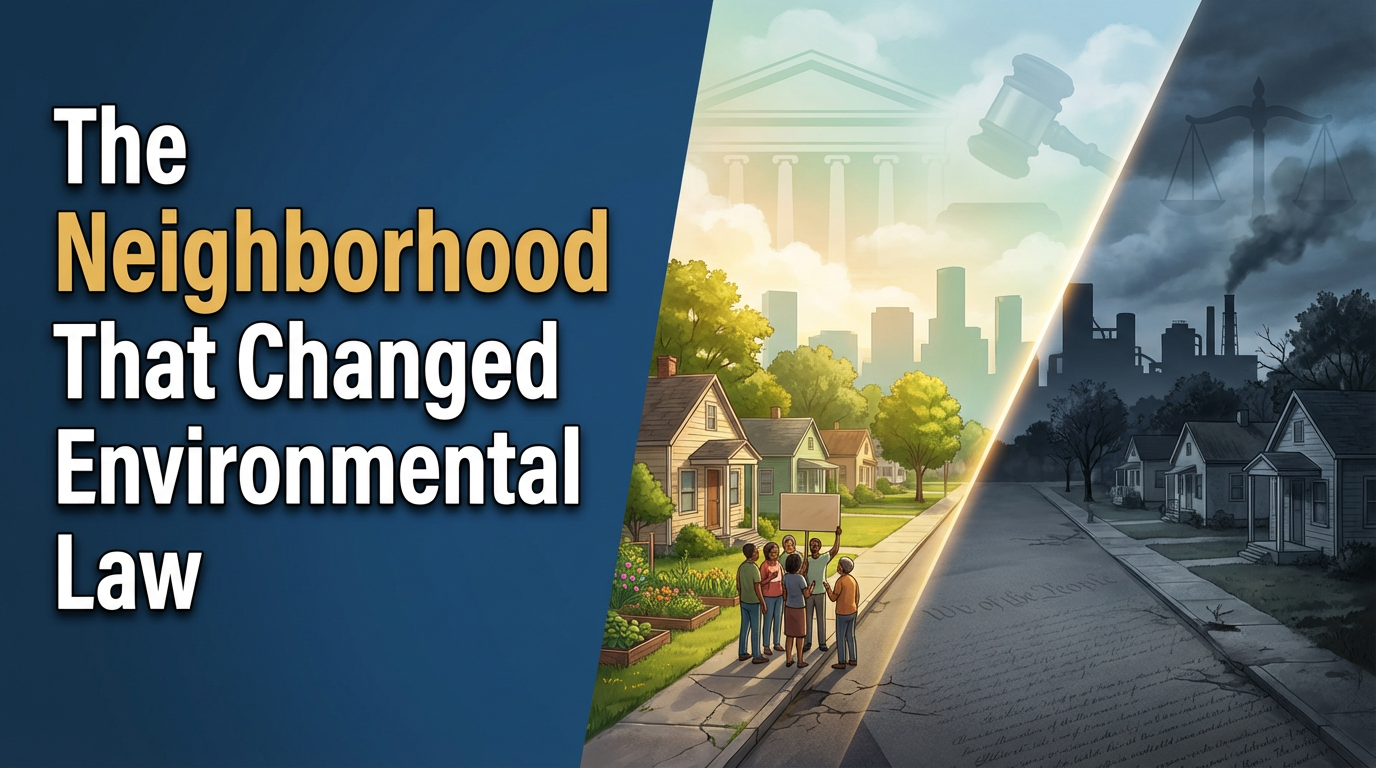
There was a time when people bought homes in Love Canal thinking they had found something stable—a working-class neighborhood near Niagara Falls, close to jobs, schools, and the kind of life people were building across America in the 1950s.
What they didn’t know was that the ground beneath them was filled with chemicals.
How It Started
In the 1940s and early 1950s, a company called Hooker Chemical Company used the area as a dumping site. They buried more than 20,000 tons of chemical waste—drums, sludge, byproducts—then covered it with dirt.
Eventually, the land was sold. A school was built. Homes followed.
On paper, it looked like progress. In reality, it was a slow-moving problem waiting for the right conditions to surface.
When It Came Back Up
By the 1970s, things started to change.
After heavy rains and construction in the area, the chemicals didn’t stay buried. They migrated—into basements, yards, and groundwater. Residents noticed strange odors, oily residues, and substances seeping into their homes.
Then came the health issues.
Families began reporting miscarriages, birth defects, and unexplained illnesses. It wasn’t immediate, and it wasn’t uniform—but it was enough to create fear, then anger.
This wasn’t theoretical anymore. People were living on top of it.
The Breaking Point
What turned Love Canal from a local problem into a national story wasn’t just the contamination it was the response.
Residents organized. One of the most visible figures was Lois Gibbs, a local mother who pushed relentlessly for answers and action. What started as a neighborhood concern became a movement.
By 1978, the federal government stepped in. President Jimmy Carter declared a federal emergency—the first time that had been done for a man-made environmental disaster.
Hundreds of families were relocated. Homes were abandoned. An entire community was effectively dismantled.
What Came Out of It
Love Canal didn’t just make headlines it forced change.
In 1980, the U.S. government created the Comprehensive Environmental Response, Compensation, and Liability Act, better known as the Superfund program. For the first time, there was a structured way to identify, fund, and clean up hazardous waste sites—and hold companies responsible.
That framework is still in use today.
Love Canal became the case study. The example. The reason regulators, developers, and municipalities now ask a very simple question before building: what was here before?
he area didn’t stay frozen in time.
The most heavily contaminated section was sealed—capped and contained. Monitoring systems were put in place. Parts of the surrounding neighborhood were eventually redeveloped under a different name, often referred to as Black Creek Village.
People live there again.
That’s the part that surprises most people.
But it’s not a full reset. The original canal area remains restricted, and the stigma never completely left. Even decades later, the name “Love Canal” carries weight. It’s not just a place—it’s shorthand for what can go wrong when development outruns responsibility.
The Real Takeaway
Love Canal wasn’t just about buried chemicals. It was about assumptions that what you don’t see can’t hurt you, that someone else has already checked, that progress doesn’t come with hidden costs.
It forced a shift in how the country thinks about land, liability, and long-term risk.
And if you’re looking at it through a modern lens—especially in real estate—it’s a reminder that the past of a property isn’t background noise. It’s part of the asset.
Sometimes, it’s the most important part.